People
Chris Wallace 
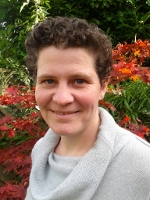
I am a statistician who works with biological datasets to understand
the mechanisms underlying human immune-mediated diseases and identify possible
treatments.
During
the GWAS era, we, and others, identified many genetic polymorphisms
that alter risk of human immune mediated diseases such as type 1 diabetes and
rheumatoid arthritis. I now follow up this research in three directions:
- jointly analysing multiple immune-mediated diseases/traits to borrow information between them and understand shared and distinct components of risk
- identifying the cell specific mechanisms through which these variants affect disease risk
- understanding how the immune system is dysregulated in disease, and how this may be modulated
Statistically, my work is focused on variable selection, horizontal integration, clustering, false discovery rates, and matrix factorisation, applied to integrated analysis of multiple related genetic and genomic datasets. How we do research is as important as the research we do, and I am focused on valuing the people who do research and developing better open science practices.
I am funded by the Wellcome Trust as a Senior Research Fellow, and PI in the Department of Medicine (University of Cambridge) and hold a Programme Leader and Research Professor position at the MRC Biostatistics Unit. Since 2022, I have also held a part time position in GSK, which allows me to learn how genomics research can be used to impact decisions in target discovery, and perhaps make some of that impact myself.
Current members
Eckart de Bie
Eckart is a PhD student in Medicine (funded by the Gates Cambridge Trust) jointly supervised by Chris Wallace and Mark Toshner. He works on discovery of (auto-)inflammatory disease endotypes in Pulmonary Arterial Hypertension (PAH). His main interests lie in integration of ‘omics’ data, clustering of patients to identify subgroups, and linking molecular data to clinical data. He hopes his PhD will contribute to personalisation of treatment and prognostication for PAH patients. He completed a MPhil in Translational Biomedical Research at the University of Cambridge (2020), and qualified in medicine at Radboud University in The Netherlands (2023). After his medical degree, Eckart worked as a junior doctor in cardiology and occasionally still does clinical work both at Royal Papworth Hospital in Cambridge and in The Netherlands (amongst others for the Dutch Red Cross).
Thomas Chen
Thomas is a PhD student at the MRC Biostatistics Unit, jointly supervised by Brian Tom. Initially studying pure mathematics and linguistics at Leiden University in the Netherlands, he did a postgraduate degree (Part III) in Mathematical Statistics at the University of Cambridge, after which he started a PhD in Biostatistics. His research project focuses on developing statistical methodology for a joint analysis of childhood and adult arthritis, JIA and RA respectively, starting with a cross-platform Bayesian model for microarray and RNA-Seq data.
Xuetao Feng

Xuetao is an MPhil student in Population Health Sciences supervised by Chris Wallace. His research focuses on statistical genetics, particularly genetic colocalisation methods and graph-based approaches for analysing shared genetic architecture across complex traits.
Wei-Yu Lin

Wei-Yu is a statistician with expertise in genetic association studies, who is leading the omics analysis for the CLUSTER programme in childhood arthritis.
Ichcha Manipur
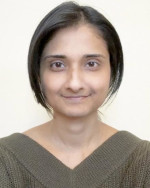
Ichcha is a Postdoctoral Research Associate with a background in Medicine and Computational Biology. Currently, she is working towards the development of statistical methods for PheWAS data and is interested in the study of shared genetic variants among multiple phenotypic traits.
Jeffrey Pullin
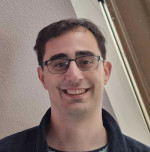
Jeffrey is a MRC Biostatistics Unit PhD student, funded by a Gates Cambridge scholarship, with a background in statistics and bioinformatics. His PhD is about designing and using statistical methods to understand the function of genetic variants associated with complex traits, focusing particularly on colocalisation and eQTL mapping. Previously he worked on single-cell RNA sequencing data back in Melbourne, Australia where he is from. In his spare time he enjoys running (when it’s not too cold), bouldering and doing cryptic crosswords.
Guillermo Reales
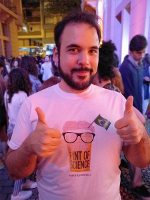
Guillermo is a Postdoctoral Associate with a background in Molecular Biology and Population Genetics. He’s particularly interested in Evolution and using computers to answer biological questions. His current work includes building a databank of GWAS summary statistics from immune-mediated diseases to help improve our knowledge about their mechanisms and their genetic relationships.
Elena Vigorito
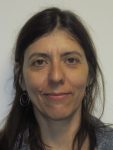
Elena obtained her PhD in immunology at the University of Barcelona, Spain, and worked for several years on gene regulation on the immune system at the Babraham Institute, UK. She then trained in epidemiology and now works on developing statistical and computational methods for modelling genetic regulation through transcriptomic datasets.
Xinzhi Zhang

Xinzhi is a PhD student jointly supervised by Hélène Ruffieux. She is currently working on factor analysis for single-cell data. She is interested in how latent factor models can be used to disentangle multiple sources of variation in large, noisy datasets, especially in separating technical variation from genuine biological signals.
Xujing Zhang
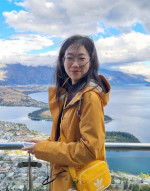
Xujing is an MPhil in Population Health Sciences student supervised by Elena Vigorito. Her research involves investigating the effects of genetic variants in immune-mediated diseases and cancer using colocalisation. She has a particular interest in bioinformatics and statistical genetics.
Alumni
Luis A. Vargas-Mieles
Luis Vargas is a research associate with experience in statistical computing, particularly in the development and use of Markov chain Monte Carlo methods applied to very high-dimensional problems, such as imaging inverse problems. In 2018, he got an MSc with merits in Computational Applied Mathematics and in 2022 he obtained a PhD in Applied & Computational mathematics, both from the University of Edinburgh. He worked on computational methods for biclustering & dimension reduction techniques in transcriptomic datasets related to immune-mediated disease.
Émeline Favreau
Émeline is a Bioinformatician who worked on the INTREPID project, providing pipelines and data handling from the lab to the cluster, as well as reports to clinicians. Her previous research focused on evolutionary biology, comparing genomes and transcriptomes of social insects.
Tom Willis
Tom was a PhD student at the MRC Biostatistics Unit. He comes from a background in computer science and statistics. His research concerned the use of conditional false discovery rates in high-dimensional ‘omics datasets, and the discovery of variants associated with rare immune-mediated diseases such as immunodeficiency.
Tobi Alegbe
Tobi was a Mathematical Genomics and Medicine PhD student based at the Wellcome Sanger institute, jointly supervised by Carl Anderson and Chris. Tobi ‘s main interest lies in the overlap of complex disease and single-cell genomics. His PhD project involves using whole genome sequencing and single-cell RNA sequencing of large cohorts to better understand the variants, pathways and cell-types involved in inflammatory bowel disease.
Alan O’Callaghan
Alan worked as a research associate at the MRC Biostatistics Unit. He comes from a background in biomedical data science. His research centred on the development and use of Bayesian models for RNA sequencing data, and he has now moved to a position in Edinburgh.
Kath Nicholls
Kath is a PhD student jointly supervised by Ken Smith. Kath has a background in mathematics and software engineering and is interested in applying these skills to large biological datasets to learn about the immune system. She has a particular interest in graphs, and is currently working on methods to learn gene regulatory networks in the immune system.
Stephen Coleman
Stephen Coleman is undertaking a MRC-funded PhD in the field of integrative clustering methods. He hopes to contribute to the understanding of human health and disease through the application of these methods to ‘omics data relevant to immune mediated diseases.
Jennifer Asimit
Jenn Asimit is a senior investigator statistician with an interest in statistical methodology development for the analysis of multiple traits, as well as fine-mapping and rare variant association approaches. She recently held a MRC Methodology Research fellowship at the Sanger institute and has developed several methods and software for rare variant association analyses and the overlap analysis of traits. She now holds an MRC career development fellowship at the BSU where she is building her own group.
Qing Qing Zhou (2022)
Qing joined the group as an MPhil student in Computational Biology at Cambridge. Previously, she was trained as a biochemist and cell biologist in HKUST, where she developed a particular interest in investigating genetic traits that have pathological implications. She worked on engineering genetic features to capture risk factors associated with immune-mediated diseases.
Anna Hutchinson (2018-2022)
Anna was a PhD student at the MRC Biostatistics Unit (iCase studentship in collaboration with GlaxoSmithKline) and stayed on as a post-doc researcher. Coming from a Natural Sciences background, she is interested in using Bayesian techniques to answer biological questions.
Her research involved determining the true coverage of credible sets in fine mapping genetic association studies. She also has interests in using Bayesian approaches for capture Hi-C and Hi-ChIP data to better understand the 3D conformation of the genome.
She is now working at GSK.
Martin Kelemen (2018-2021)
Martin was a PhD student on the Mathematical Genomics and Medicine programme, supervised by Carl Anderson at the Wellcome Trust Sanger Institute and jointly by Chris. His research focused on developing practical machine learning methods for GWAS data, that will improve our understanding of how genetic differences influence variation in complex disease risk.
Martje Bos (2022)
Martje, as an MPhil student in Population Health Sciences and joined the group to undertake research for her thesis on condition-specific eQTLs in rheumatoid arthritis. For this, she was supervised by Elena Vigorito and Wei-Yu Lin. She obtained her BSc. in Health and Life Sciences from the University of Groningen and hopes to study for a PhD in Genetic Epidemiology after completing her MPhil.
Nastasiya Grinberg (2017-2021)
Nastasiya Grinberg’s research interests revolve around applications of machine learning and data mining techniques to genetic data and in bioinformatics. She also has a special interest in scientific computing. She worked on colocalisation and TWAS and now holds a Senior Specialist position at NIAB, Cambridge.
Oliver Burren (2017-2019)
Olly Burren undertook a PhD, researching methods to integrate genomic and genetic datasets to better understand autoimmune disease mechanisms.
Thesis: Integrative statistical methods for the genomic analysis of immune-mediated disease.
He was previously head of Genome Informatics in the Diabetes and Inflammation Laboratory where he was responsible for the creation and smooth running of the ImmunoBase, T1DBase and CHiCP web resources which collate data and summary information from genomic, GWAS and ImmunoChip analyses of autoimmune diseases. He now works at Astra Zeneca.
Hope Watson (2018)
Hope Watson undertook her thesis research for her MPhil in Epidemiology. Her research involved using Bayesian credible intervals to determine coverage of credible sets in fine mapping genetic associations. She also has an interest in systems architecture and high performance computing.
James Liley (2015-2018)
James Liley was a NIHR/BRC funded student on the Wellcome Trust four-year PhD programme in Mathematical Genomics and Medicine. He worked on analysis of GWAS and similar data across multiple diseases and in disease subtypes, and theoretical developments to the conditional False Discovery Rate. He is now a working at Edinburgh University.
Loes Rutten-Jacobs (2016-2018)
Loes Rutten-Jacobs held a British Heart Foundation Immediate Research Fellowship in the Stroke Research Group of the Department of Clinical Neurosciences, University of Cambridge and was a visiting member of our group during this time. She has now moved to Bonn, where she continues her research on pathophysiological mechanisms underlying cerebral small vessel disease, using genetic and epidemiologic approaches.
Chris Eijsbouts (2016-2017)
Chris Eijsbouts first joined the group as an MPhil student in Computational Biology for a 3 month summer project. He stayed on afterwards as a research assistant, to continue his work on the interpretation of Capture Hi-C data. The goal of this project was to develop a method for improved identification of chromatin contacts which regulate gene expression, thereby facilitating the interpretation of GWAS studies. He started a PhD in Oxford in Autumn 2017.
Steven Kiddle (2014-2017)
Steven Kiddle held an MRC Career Development Fellow in Biostatistics based at King’s College London, on which Chris Wallace was a statistical mentor. He visited our group in Cambridge from 2015-6, working on clustering approaches for time series and biomarkers of Alzheimer’s Disease.
He now holds a new MRC Career Development Fellowship and is based in the MRC Biostatistics Unit.
Mary Fortune (2013-2017)
Mary Fortune worked as a Wellcome Trust PhD student in the Mathematical Genomics and Medicine programme on colocalisation analysis in dependent datasets and methods for fitting models of genetic causality to summary GWAS data. She stayed on in the group to complete papers arising from her PhD work and has now moved to the MRC Biostatistics Unit.
Thesis: Statistical Techniques to Fine Map the Related Genetic Aetiology of Autoimmune Diseases
Lucia Cilloni (Summer 2015)
Lucia did her BSc in Mathematics at the University of Newcastle Upon Tyne and her MPhil in Computational Biology at Cambridge University. She did her summer project in the Wallace group on eQTL-GWAS colocalisation analysis to identify causal genes for Type 1 Diabetes. She is now studying for a PhD in Epidemiology at Imperial College London.
Hui Guo (2010-2014)
Hui worked as a post doctoral researcher on gene expression data, and led the analysis of our study relating gene expression in PBMCs from children at risk of type 1 diabetes to autoantibody positivity. She is now a lecturer in biostatistics at University of Manchester.
Xin Yang (2011-2014)
Xin’s PhD focused on analysis of all kinds of next gen sequencing data - pooled DNA, RNA seq, and bisulfite seq. She had a special interest in modelling the extra binomial variation induced by pooling.
Thesis: Statistical analysis of next-generation sequencing data with applications to type 1 diabetes studies.
She moved to KCL in 2014, and from there to the CTTV project at Sanger/GSK.
Nikolas Pontikos (2011-2014)
During Niko’s PhD he worked on automated analysis of flow cytometry data and applying clustering methods to call and impute genotypes in the KIR locus.
Thesis: Normalisation and Clustering Methods Applied to Association Studies in Type 1 Diabetes
He moved to UCL in 2014 and maintains notes about his current work.